
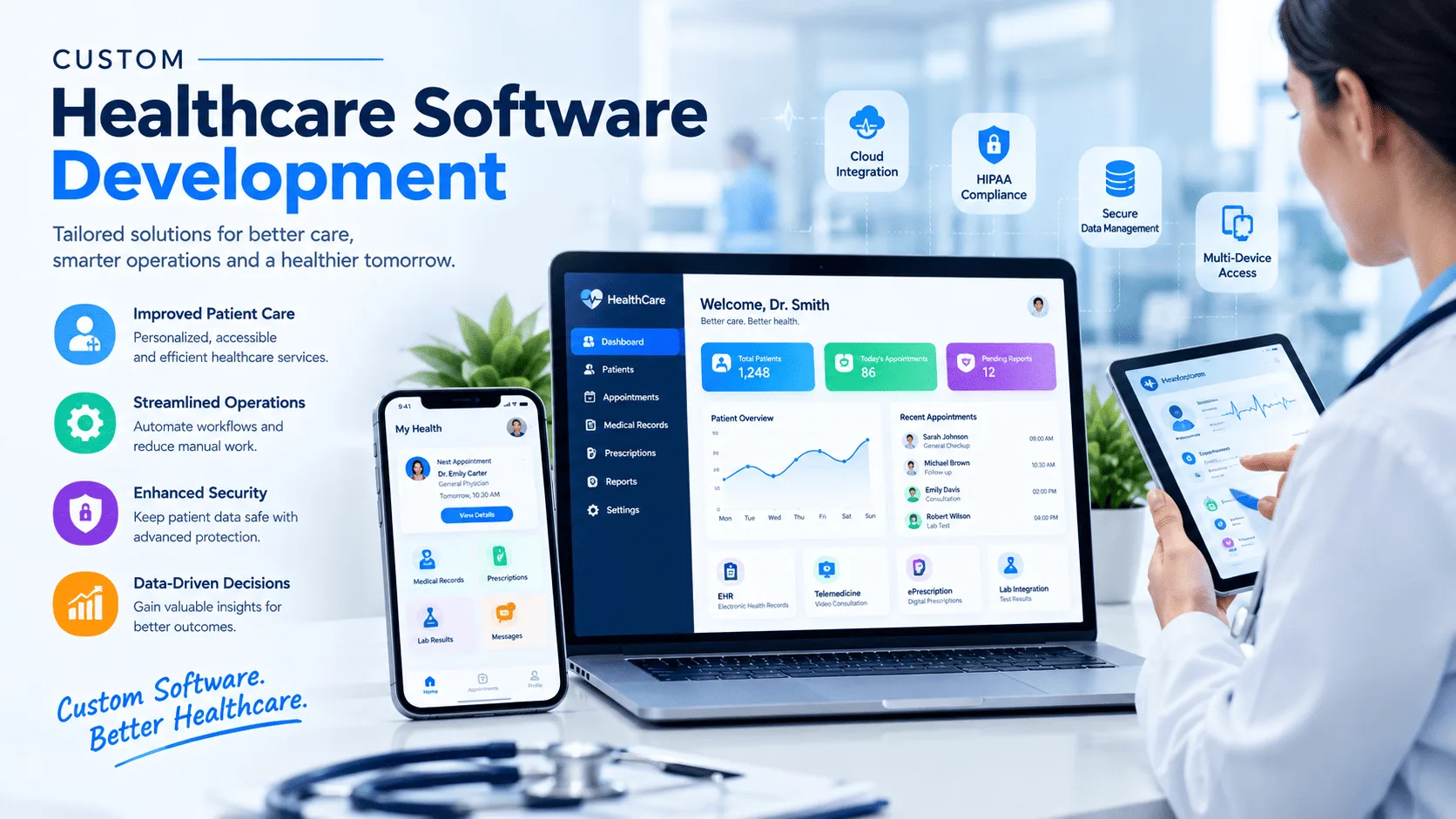
The healthcare industry is rapidly adopting digital technologies to improve patient care, streamline operations, and provide better access to medical services. From electronic health records and telemedicine platforms to hospital management systems and patient mobile applications, software has become an essential part of modern healthcare.
However, every healthcare organization has different requirements. A small clinic may need a simple appointment management system, while a large hospital may require an integrated platform for patient records, billing, pharmacy, laboratory management, and communication. This is where custom healthcare software development becomes valuable.
Custom healthcare software is designed specifically around the needs, workflows, and goals of a healthcare organization. Instead of adapting business processes to generic software, organizations can develop solutions that fit their existing operations and provide room for future growth.
What Is Custom Healthcare Software Development?
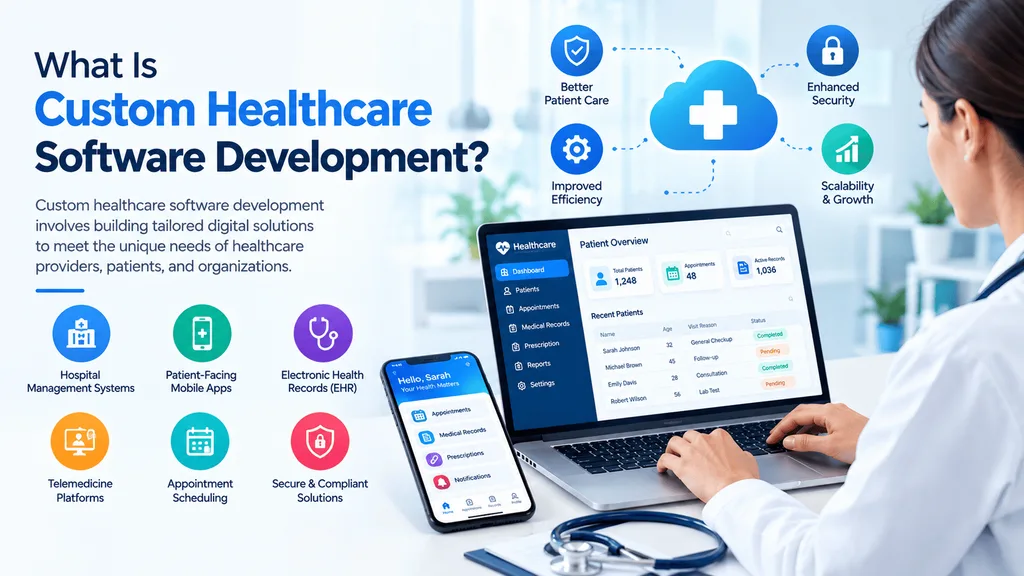
Custom healthcare software development is the process of designing, developing, testing, deploying, and maintaining software specifically for healthcare organizations and their users.
Unlike ready-made healthcare applications, custom software is built according to the unique requirements of hospitals, clinics, laboratories, pharmacies, healthcare startups, medical professionals, and patients.
A custom healthcare solution can include features such as:
- Patient management
- Electronic health records (EHR)
- Electronic medical records (EMR)
- Appointment scheduling
- Telemedicine
- Online consultations
- Medical billing
- Prescription management
- Laboratory management
- Pharmacy management
- Patient portals
- Doctor portals
- Healthcare analytics
- Automated notifications
- Secure messaging
- Insurance management
The main goal is to create a secure, scalable, and user-friendly digital solution that improves healthcare delivery while reducing administrative workload.
Why Do Healthcare Organizations Need Custom Software?
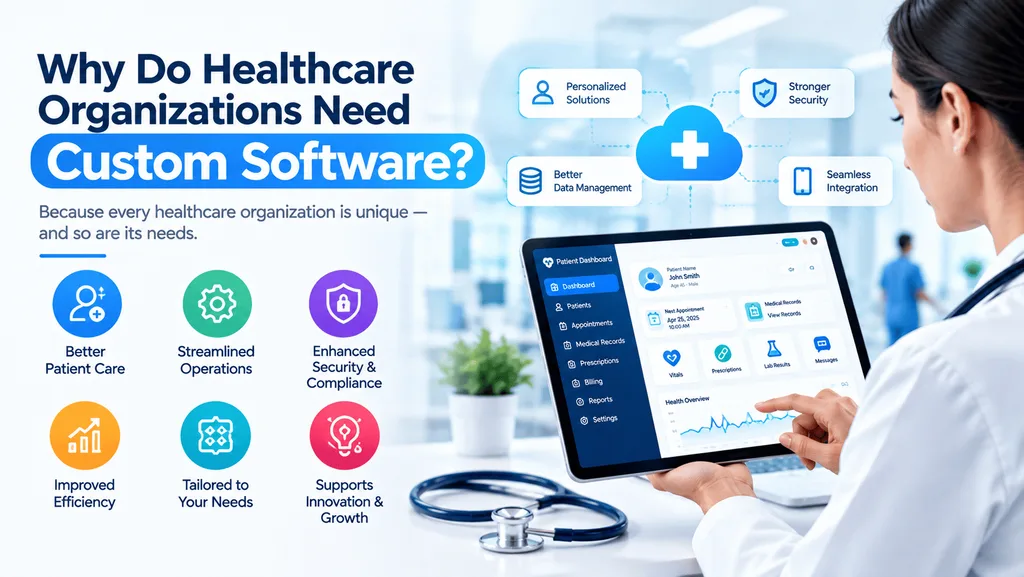
Healthcare organizations handle large amounts of sensitive information and complex workflows every day. Generic software may provide basic functionality, but it may not address the specific needs of an organization.
Custom healthcare software allows businesses to build solutions around their actual processes.
For example, a hospital may want to connect its appointment system with its patient records, billing department, pharmacy, and laboratory. A custom platform can integrate these functions into one centralized system.
Custom software can also help healthcare providers reduce repetitive administrative tasks, improve communication, increase operational efficiency, and deliver better patient experiences.
Benefits of Custom Healthcare Software Development
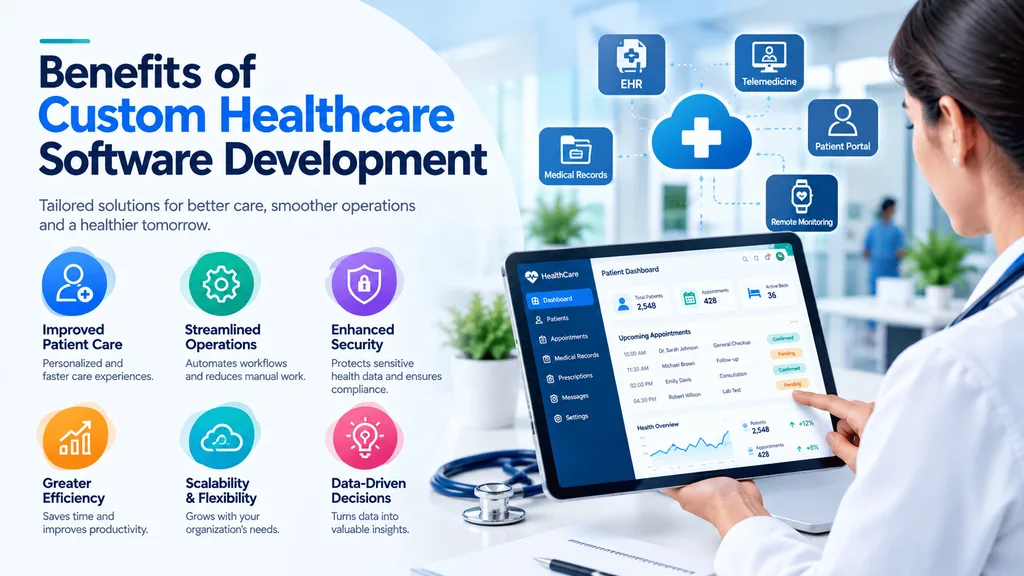
1. Personalized Functionality
One of the biggest advantages of custom healthcare software is personalization. Developers can create features based on the organization’s specific requirements.
Healthcare providers can choose the functions they actually need instead of paying for unnecessary features included in generic software.
2. Improved Patient Experience
Patients increasingly expect convenient digital healthcare services. Custom healthcare applications can provide features such as online appointment booking, virtual consultations, prescription access, medical records, reminders, and secure communication.
A convenient digital experience can make it easier for patients to interact with healthcare providers.
3. Better Data Management
Healthcare organizations generate large volumes of information. Managing patient records, appointments, prescriptions, test results, invoices, and other information manually can be challenging.
Custom software can centralize important information and make it easier for authorized users to access and manage data.
4. Enhanced Security
Healthcare data is highly sensitive, making security a major priority. Custom healthcare software can be designed with appropriate security controls, authentication mechanisms, encryption, access permissions, audit logs, and other safeguards.
Security requirements should also be aligned with the healthcare regulations applicable to the organization and the countries where it operates.
5. Easy Integration
Healthcare organizations often use multiple systems and technologies. A custom solution can be designed to integrate with existing applications, databases, medical devices, payment systems, laboratory systems, and other platforms.
Proper integration can reduce duplicate data entry and improve information flow between departments.
6. Scalability
Healthcare businesses can grow over time. A custom healthcare platform can be designed with scalability in mind, allowing organizations to add new users, locations, departments, services, and features as their needs evolve.
This makes custom software a long-term technology investment.
7. Increased Operational Efficiency
Automation can reduce the amount of time employees spend on repetitive administrative tasks.
For example, automated appointment reminders can reduce manual communication, while digital workflows can simplify patient registration, billing, and reporting.
Types of Custom Healthcare Software
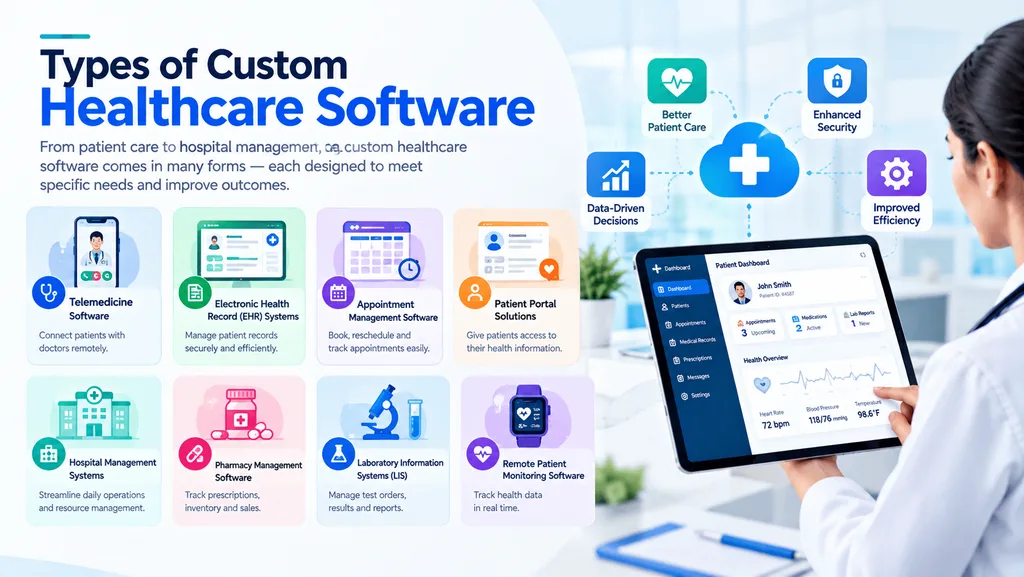
Custom healthcare software can be developed for many different healthcare requirements.
Hospital Management Software
Hospital management systems help healthcare facilities manage daily operations. Common features include patient registration, appointments, doctor scheduling, billing, pharmacy management, laboratory management, and reporting.
Electronic Health Record Software
EHR software allows healthcare providers to digitally manage patient information. Depending on the organization’s requirements, it may include medical history, diagnoses, medications, test results, treatment information, and clinical notes.
Telemedicine Software
Telemedicine platforms allow patients to communicate with healthcare professionals remotely. Features may include video consultations, appointment scheduling, online payments, digital prescriptions, and secure messaging.
Healthcare Mobile Applications
Healthcare mobile apps can be developed for patients, doctors, nurses, or healthcare businesses. Patient apps may provide appointment booking, medication reminders, health tracking, and access to healthcare information.
Medical Billing Software
Medical billing systems can automate invoices, payment processing, insurance-related workflows, billing records, and financial reporting.
Laboratory Management Software
Laboratory software helps manage test orders, sample tracking, results, reports, and communication between laboratories and healthcare providers.
Pharmacy Management Software
Pharmacy solutions can help manage inventory, prescriptions, sales, suppliers, product information, and reporting.
Key Features of Custom Healthcare Software
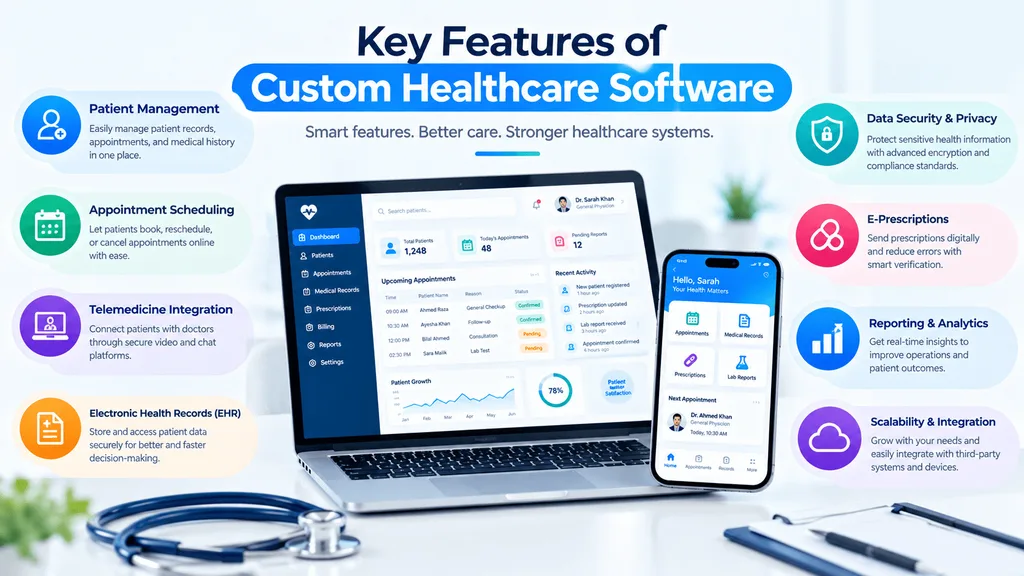
The features of healthcare software depend on the organization’s needs. However, many solutions include several common capabilities.
Patient Management
A centralized patient management system can help staff organize patient profiles, medical information, appointments, and related records.
Appointment Scheduling
Online scheduling allows patients and staff to book, reschedule, or cancel appointments. Automated reminders can also help reduce missed appointments.
Secure User Authentication
Healthcare applications should provide appropriate authentication and authorization mechanisms. Role-based access can ensure that users only access information relevant to their responsibilities.
Electronic Medical Records
Digital medical records can help healthcare professionals access important patient information more efficiently.
Telehealth Capabilities
Telehealth functionality can support remote consultations and communication between patients and healthcare professionals.
Reporting and Analytics
Healthcare analytics can help organizations understand operational performance, patient trends, financial information, and other important metrics.
Notifications
Email, SMS, push notifications, and in-app alerts can be used for appointment reminders, prescription notifications, reports, and other communications.
Custom Healthcare Software Development Process
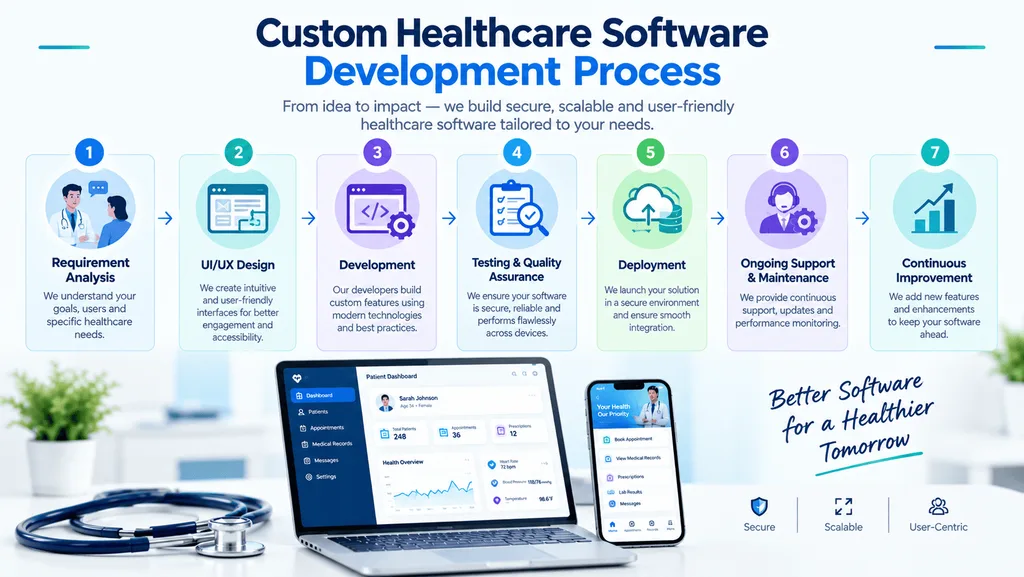
Developing healthcare software requires careful planning because the software may handle sensitive information and support critical workflows.
Step 1: Requirement Analysis
The development process begins by understanding the organization’s objectives, users, workflows, technical environment, and regulatory requirements.
Developers and stakeholders identify the most important features and define the project’s scope.
Step 2: UI/UX Design
Healthcare software should be simple and intuitive because users may have different technical skill levels.
Designers create interfaces for patients, doctors, administrators, nurses, and other users based on their individual needs.
Step 3: Software Development
Developers build the application’s frontend, backend, database, APIs, integrations, and other components.
The technology stack depends on the project’s requirements, including performance, scalability, security, and platform compatibility.
Step 4: Testing
Healthcare software requires extensive testing. Developers can test functionality, usability, performance, security, integrations, and compatibility.
Testing helps identify issues before the software is released to users.
Step 5: Deployment
After successful testing, the application can be deployed to the selected infrastructure, such as cloud-based or on-premises environments.
The deployment strategy should consider security, availability, scalability, and organizational requirements.
Step 6: Maintenance and Updates
Software development does not end after deployment. Healthcare applications require ongoing maintenance, monitoring, security updates, bug fixes, performance improvements, and new features.
Continuous improvement helps ensure that the software remains useful as healthcare requirements change.
Security and Compliance in Healthcare Software
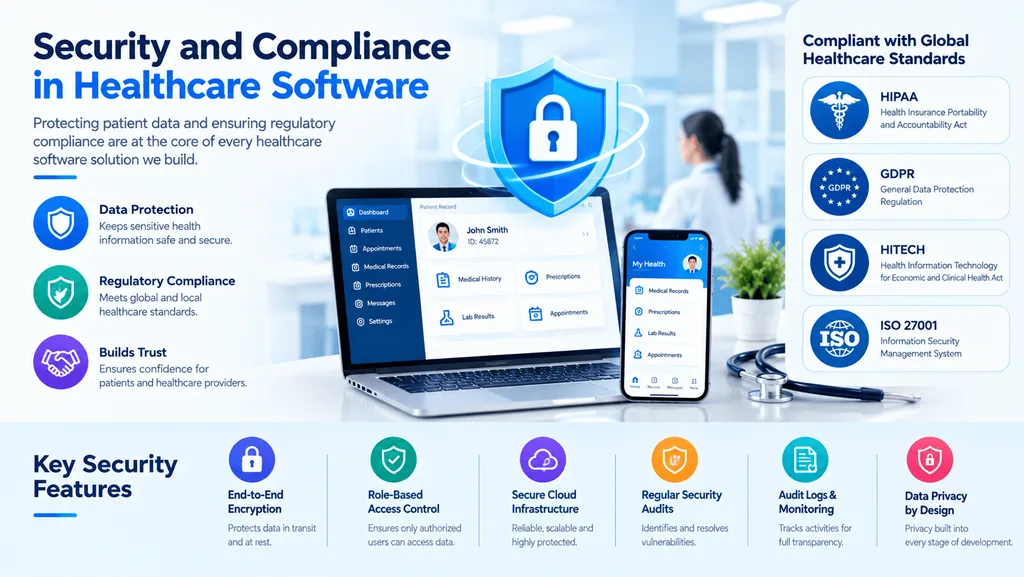
Security should be considered throughout the entire development lifecycle.
Healthcare software may contain sensitive patient information, so organizations need strong controls for protecting data against unauthorized access, loss, and misuse.
Depending on the location and type of healthcare organization, applicable requirements may include regulations and standards such as HIPAA in the United States, GDPR in the European Union, or other local healthcare and privacy regulations.
Important security practices can include:
- Data encryption
- Secure authentication
- Role-based access control
- Audit logging
- Secure APIs
- Regular security testing
- Backup and recovery systems
- Vulnerability monitoring
- Secure cloud infrastructure
Organizations should work with qualified legal, compliance, and security professionals to determine which regulations apply to their specific environment.
How Much Does Custom Healthcare Software Development Cost?
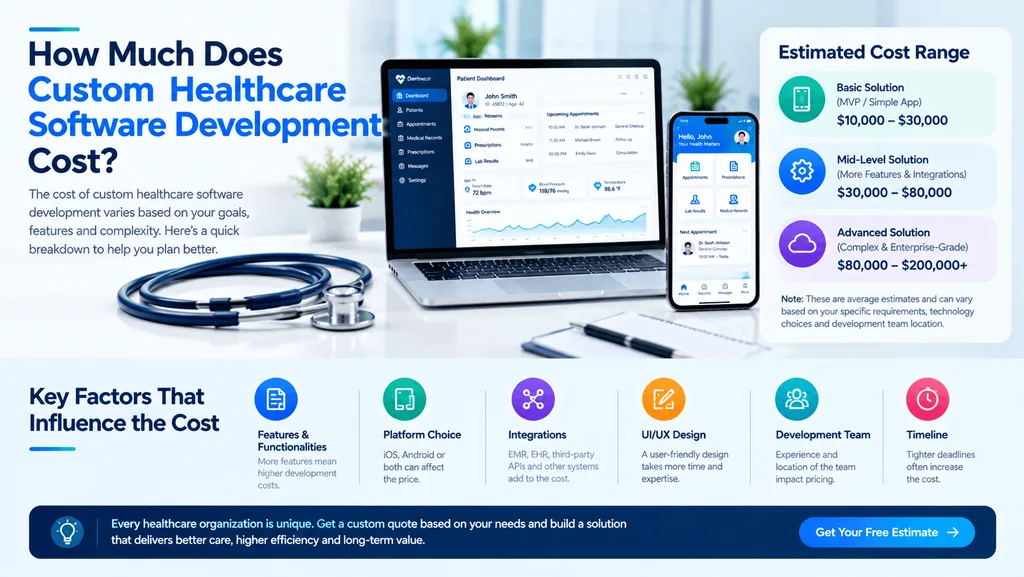
The cost of custom healthcare software development varies significantly depending on the project.
Factors that can influence the cost include:
- Number of features
- Software complexity
- Number of platforms
- UI/UX requirements
- Third-party integrations
- Security requirements
- Compliance requirements
- Development team location
- Development timeline
- Cloud infrastructure
- Maintenance requirements
A basic healthcare application may require significantly less investment than a complex hospital management platform with multiple integrations and user roles.
The best approach is to define requirements first and then request a detailed project estimate.
How to Choose a Custom Healthcare Software Development Company
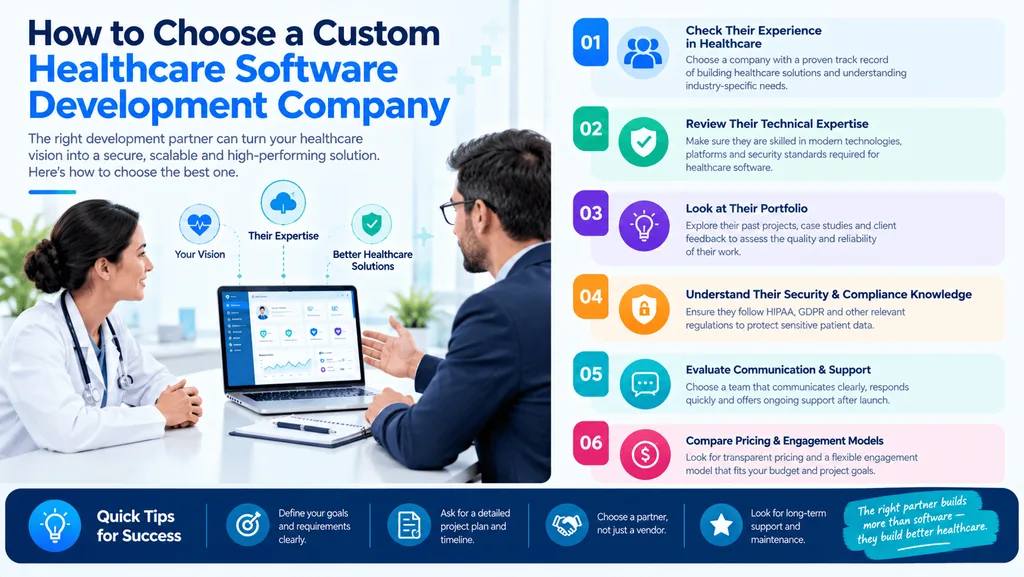
Choosing the right development partner is an important decision. Healthcare software requires technical expertise as well as an understanding of security, privacy, integrations, and healthcare workflows.
When evaluating a development company, consider:
Healthcare Experience
Look for developers with experience building healthcare-related applications and understanding healthcare workflows.
Technical Expertise
Evaluate their experience with mobile development, web applications, cloud technologies, APIs, databases, artificial intelligence, and other technologies relevant to your project.
Security Knowledge
Ask how the development team approaches data protection, authentication, authorization, encryption, testing, and compliance requirements.
Portfolio
Review previous projects to understand the company’s capabilities and development quality.
Communication
Effective communication is important throughout the development lifecycle. Make sure the development team provides clear updates and documentation.
Post-Launch Support
Choose a partner that can provide maintenance, technical support, monitoring, updates, and future development.
Future of Custom Healthcare Software Development
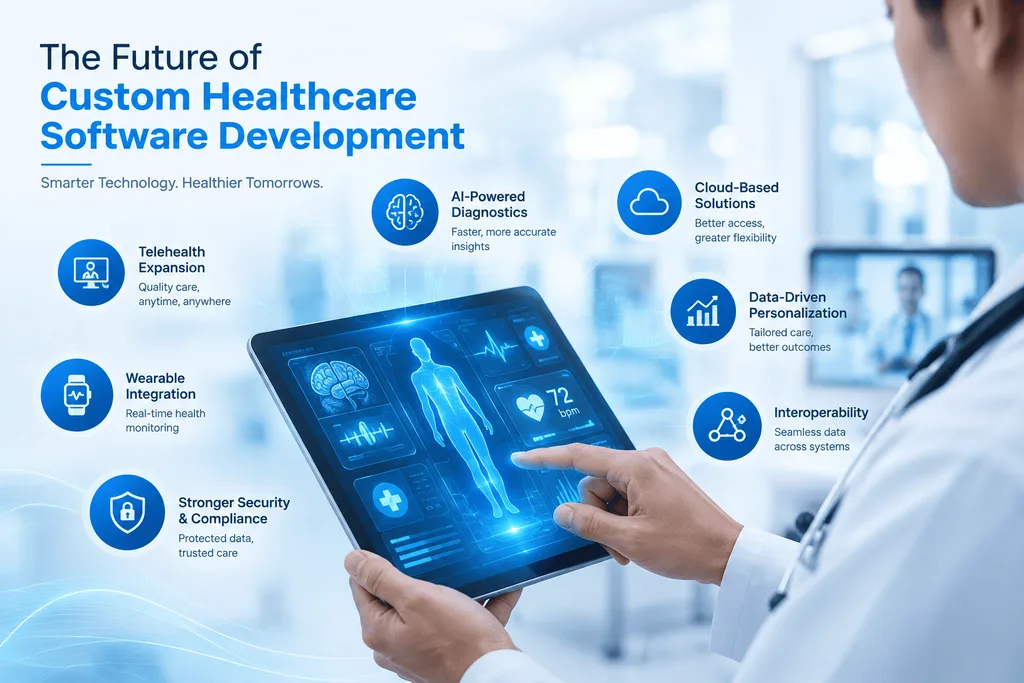
The future of healthcare software is expected to be increasingly digital, connected, and data-driven.
Artificial intelligence, machine learning, wearable devices, remote patient monitoring, cloud computing, automation, and advanced analytics are creating new opportunities for healthcare organizations.
AI-powered healthcare applications can support tasks such as data analysis, administrative automation, clinical decision support, and personalized patient experiences. However, AI systems in healthcare require careful validation, privacy protection, human oversight, and appropriate regulatory consideration.
Wearable devices and Internet of Medical Things technologies can also enable healthcare providers to collect and analyze health-related data remotely.
As these technologies develop, custom healthcare software can help organizations integrate new capabilities into their existing digital infrastructure.
Conclusion
Custom healthcare software development enables healthcare organizations to create digital solutions that match their unique operational and patient-care requirements. From hospital management systems and electronic health records to telemedicine platforms and healthcare mobile apps, custom software can improve efficiency, accessibility, data management, and patient engagement.
The success of a healthcare software project depends on careful planning, intuitive design, reliable technology, strong security, regulatory awareness, comprehensive testing, and continuous maintenance.
For healthcare organizations looking to modernize their operations, investing in a scalable and secure custom healthcare software solution can provide a strong foundation for long-term digital transformation.
General & Strategic Questions
Q1: What is custom healthcare software development, and why is it essential in 2026?
Custom healthcare software development involves building tailored digital solutions—such as Electronic Health Record (EHR) systems, telemedicine platforms, or remote patient monitoring (RPM) apps—designed to fit a provider’s specific workflows. In 2026, it is vital for integrating advanced AI diagnostics, automating administrative tasks, and staying compliant with evolving health data laws.
Q2: How does custom software deliver a higher ROI compared to off-the-shelf software?
While off-the-shelf software has lower upfront costs, custom software eliminates perpetual per-user licensing fees, reduces staff burnout by adapting to actual clinical workflows, and lowers operational overhead through tailored automation. Over 3 to 5 years, the operational savings and improved patient retention typically outweigh the initial custom build investment.
Costs & Budgeting
Q3: How much does custom healthcare software development cost in 2026?
Costs depend on complexity, system integrations, and regulatory scope:
- Basic Applications (e.g., Simple Patient Portal or Booking App): $40,000 – $80,000
- Mid-Complexity Systems (e.g., Custom Telehealth or RPM Platform): $80,000 – $200,000
- Complex Enterprise Systems (e.g., AI-Driven EHR or Multi-Hospital Management Systems): $200,000 – $500,000+
Q4: What ongoing maintenance costs should healthcare organizations expect?
Plan to allocate 15% to 25% of the initial development cost annually for maintenance. This covers mandatory security patch updates, routine vulnerability audits, cloud hosting fees, system API updates, and continuous HIPAA compliance monitoring.
HIPAA Compliance & Data Security
Q5: How do custom healthcare solutions ensure strict HIPAA compliance?
Development teams enforce multi-layered security controls, including:
- End-to-End Encryption: AES-256 for data at rest and TLS 1.3 for data in transit.
- Access Protocols: Multi-Factor Authentication (MFA) and Role-Based Access Control (RBAC).
- Audit Logging: Immutable audit logs tracking all access, edits, and transfers of Protected Health Information (PHI).
- Vendor BAAs: Executing Business Associate Agreements (BAAs) with compliant cloud infrastructure providers (such as AWS Healthcare or Microsoft Azure for Health).
Q6: Can custom healthcare software integrate with existing EHR systems while maintaining security?
Yes. Modern custom platforms use standardized healthcare data interchange protocols like FHIR (Fast Healthcare Interoperability Resources) and HL7 to safely exchange data with legacy systems like Epic, Cerner, or Athenahealth without compromising security.
Development & Post-Launch
Q7: How long does it take to design and launch custom healthcare software?
- MVP / Proof of Concept: 3 to 5 months
- Full-Featured Enterprise Solution: 6 to 12+ months
Timelines encompass initial discovery, UI/UX design, compliance verification, sprint development, penetration testing, and system deployment.
Q8: Who owns the software intellectual property (IP) and data rights?
You retain 100% ownership of the application’s source code, design assets, and data structures. Ensure your agency agreement explicitly states that full IP assignment transfers to your organization upon project completion.