

In today’s digital-first world, mobile and web applications have become essential tools for businesses of all sizes. From startups and small businesses to large enterprises, companies use apps to connect with customers, automate operations, increase sales, and build stronger digital experiences. This growing demand has made app development companies an important part of the modern technology industry.
An app development company provides professional services for planning, designing, developing, testing, launching, and maintaining applications. By working with experienced developers, businesses can turn an idea into a functional and scalable digital product without having to build a large in-house technical team.
This guide explains what app development companies do, the services they offer, the types of applications they develop, their benefits, costs, and how to choose the right development partner.
What Are App Development Companies?

App development companies are specialized technology firms that create mobile, web, and enterprise applications for businesses, organizations, and individuals. Their teams usually include software developers, UI/UX designers, project managers, quality assurance specialists, business analysts, and other technology professionals.
These companies work closely with clients to understand their business goals, target audience, technical requirements, and budget. They then create a development strategy and transform the concept into a working application.
A professional mobile app development company can develop applications for platforms such as iOS and Android, while some companies also specialize in cross-platform development. Other firms provide web application development, enterprise software development, cloud integration, and ongoing application support.
Why Do Businesses Need App Development Companies?

Businesses increasingly depend on digital platforms to remain competitive. A well-designed application can improve customer engagement, simplify business processes, and create new revenue opportunities.
Working with an app development company gives businesses access to specialized technical knowledge without requiring them to hire and manage a complete internal development department.
Some major reasons businesses choose professional app developers include:
- Access to experienced developers and designers
- Faster product development
- Customized software solutions
- Better application performance
- Improved user experience
- Stronger security
- Easier scalability
- Continuous maintenance and support
- Integration with existing business systems
For startups, an experienced development partner can also help validate an idea, create a minimum viable product (MVP), and prepare the application for future growth.
Types of Apps Developed by App Development Companies

App development companies work on many different types of applications depending on industry and business requirements.
1. Mobile Applications
Mobile app development is one of the most popular services offered by development companies. These applications are designed for smartphones and tablets.
Common mobile applications include:
- E-commerce apps
- Banking apps
- Healthcare apps
- Education apps
- Social networking apps
- Fitness applications
- Food delivery apps
- Travel applications
- Business productivity apps
Developers can build native iOS and Android applications or use cross-platform technologies to create applications that work across multiple devices.
2. Web Applications
Web applications operate through web browsers and can be accessed from computers, smartphones, and tablets. They are commonly used for business dashboards, customer portals, online marketplaces, booking platforms, and SaaS products.
A web application development company focuses on creating responsive, secure, and scalable browser-based solutions.
3. Enterprise Applications
Large organizations often require customized enterprise applications to manage internal operations. These applications can support areas such as human resources, finance, inventory, customer management, communication, and business analytics.
Enterprise app development companies focus on scalability, security, integration, and performance.
4. E-Commerce Applications
E-commerce apps allow customers to browse products, place orders, make payments, track deliveries, and communicate with businesses.
Development companies can integrate payment gateways, inventory systems, customer accounts, analytics, and personalized recommendations into e-commerce applications.
5. Healthcare Applications
Healthcare app development is another growing area. Applications can support appointment scheduling, telemedicine, electronic health information, medication management, fitness tracking, and communication between healthcare providers and patients.
Because healthcare applications often handle sensitive information, security, privacy, and regulatory requirements are especially important.
Key Services Offered by App Development Companies
A professional app development company usually provides services throughout the complete application lifecycle.
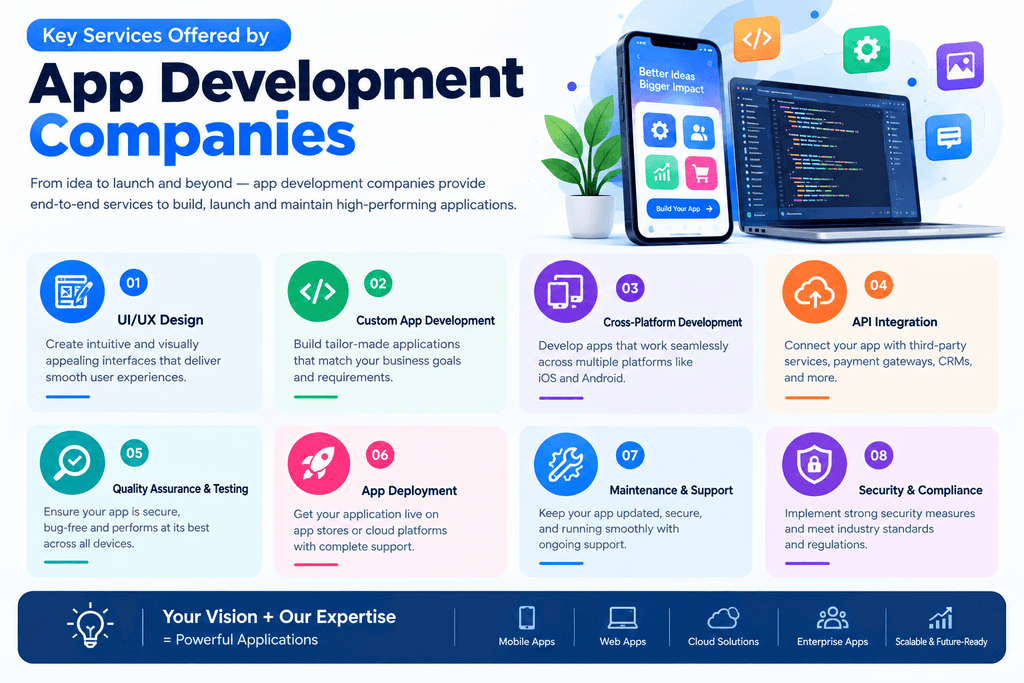
UI/UX Design
The design team creates the visual interface and user experience of the application. Good UI/UX design makes an application easy to understand, navigate, and use.
Designers may create wireframes, prototypes, design systems, and interactive interfaces before development begins.
Custom App Development
Custom app development involves creating software specifically for a company’s requirements rather than relying on generic solutions.
Custom applications can provide greater flexibility, functionality, and integration capabilities.
Cross-Platform Development
Cross-platform development allows businesses to create applications that operate across multiple platforms using a shared development approach. This can reduce development time and simplify maintenance.
API Integration
APIs allow applications to communicate with external systems and services. Developers can integrate payment gateways, maps, analytics platforms, customer relationship management systems, cloud services, and other business tools.
Quality Assurance and Testing
Testing is an important part of professional application development. QA teams test applications for bugs, performance problems, security weaknesses, compatibility issues, and usability problems.
Testing can include functional testing, performance testing, security testing, device testing, and user acceptance testing.
App Deployment
After development and testing, developers prepare the application for release. Mobile applications may be submitted to app stores, while web applications can be deployed to cloud or hosting environments.
Maintenance and Support
Application development does not end after launch. Regular updates may be required to fix bugs, improve security, support new operating systems, add features, and maintain performance.
Reliable app development companies often provide ongoing maintenance and technical support.
Benefits of Hiring an App Development Company

Hiring a professional development company can provide several advantages.
Access to Skilled Professionals
Development companies bring together developers, designers, testers, project managers, and technical specialists. Businesses can benefit from this combined expertise without building a large internal team.
Cost-Effective Development
Building an in-house development team can require significant investment in recruitment, salaries, infrastructure, software, and training. Outsourcing development can provide access to specialized talent while reducing some of these overhead costs.
Faster Time to Market
Experienced development teams have established workflows, development processes, and technical expertise. This can help businesses move from an initial concept to a market-ready product more efficiently.
Customized Solutions
A professional company can create an application based on specific business objectives. Features, workflows, integrations, and user experiences can be designed around the company’s needs.
Scalability
A scalable application can grow as the business gains more customers and handles more transactions. Developers can build flexible architectures that support future expansion.
Better Security
Professional developers can implement authentication, authorization, encryption, secure APIs, data protection, and other security measures to reduce application risks.
App Development Process
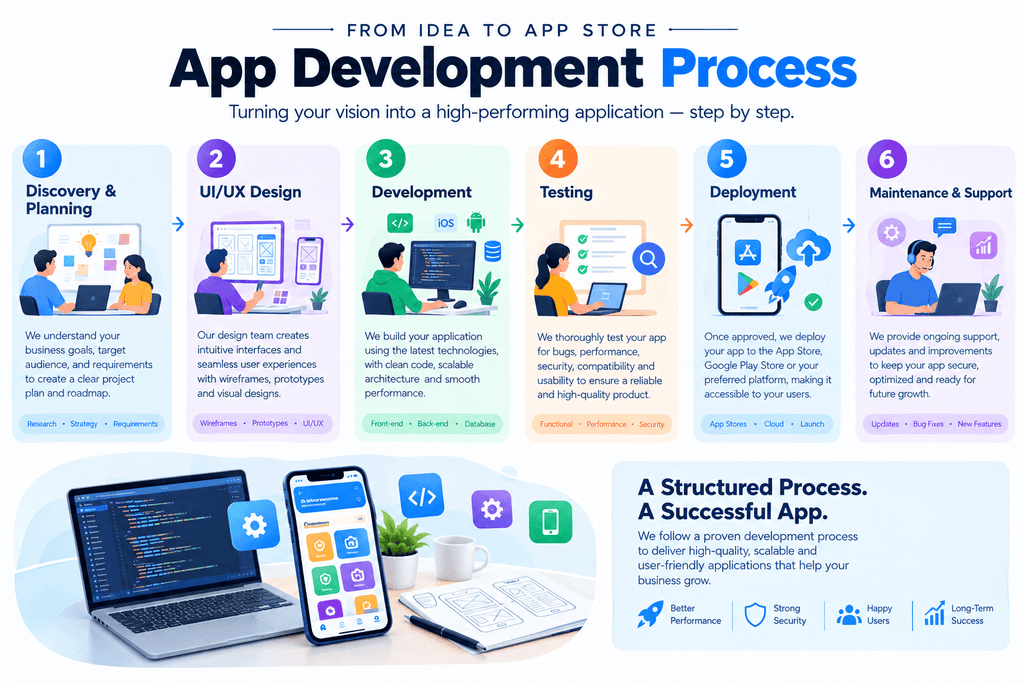
Most professional app development companies follow a structured process.
1. Discovery and Planning
The project begins with research and requirement gathering. Developers and business analysts identify the target audience, business objectives, key features, technical requirements, and project scope.
2. UI/UX Design
Designers create the application’s structure, navigation, visual elements, and user experience. Prototypes can be tested and refined before development starts.
3. Development
Developers build the application’s front-end and back-end components. Databases, APIs, authentication systems, integrations, and other required features are implemented during this stage.
4. Testing
The completed features are tested to identify bugs and performance issues. Developers resolve problems before the application is released.
5. Deployment
Once the application passes testing, it is deployed to its target environment or submitted to relevant app stores.
6. Maintenance
After launch, the development team monitors the application, resolves issues, provides updates, and introduces improvements based on user feedback.
How Much Does App Development Cost?
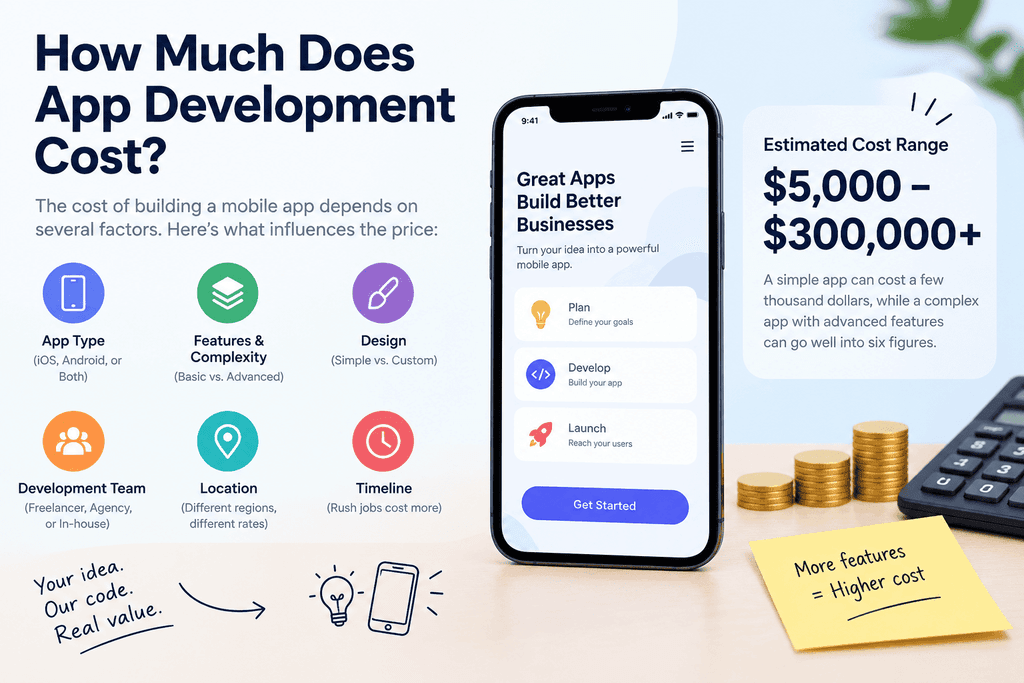
The cost of app development varies considerably depending on the project’s complexity and requirements. There is no single price that applies to every application.
Factors affecting app development cost include:
- Number of features
- Application complexity
- Design requirements
- Platform selection
- Development technology
- Third-party integrations
- Backend infrastructure
- Security requirements
- Testing requirements
- Development team location
- Ongoing maintenance
A simple application with basic functionality will generally require less development work than a complex enterprise platform containing advanced integrations, real-time functionality, analytics, and sophisticated security.
Businesses should therefore focus on project requirements and expected business value rather than choosing a development company based solely on the lowest price.
How to Choose the Right App Development Company

Choosing the right development partner can have a major impact on the success of an application.
Check Their Portfolio
Review previous projects to understand the company’s design quality, technical capabilities, and industry experience.
Evaluate Technical Expertise
Make sure the development team has experience with the technologies and platforms required for your project.
Read Client Reviews
Testimonials and independent reviews can provide useful information about communication, project management, reliability, and customer satisfaction.
Consider Communication
Clear and consistent communication is essential. Choose a company that provides regular updates and maintains transparent project processes.
Ask About Security
Security should be discussed from the beginning, particularly for applications that handle financial, personal, business, or healthcare information.
Understand Post-Launch Support
Ask whether the company provides maintenance, bug fixes, updates, monitoring, and future feature development after launch.
App Development Companies for Startups
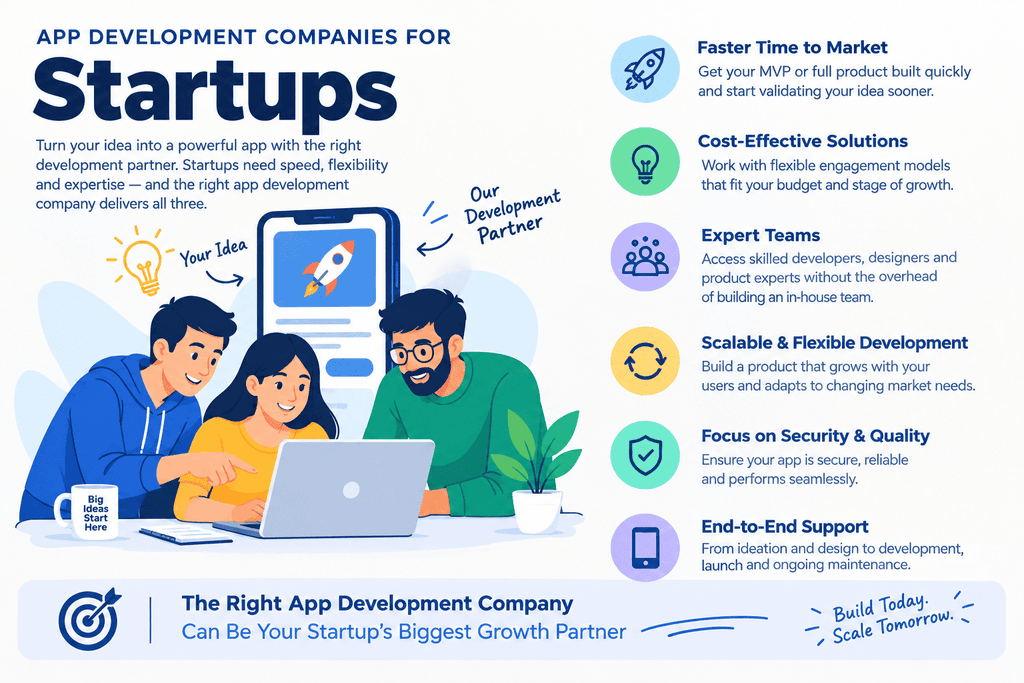
Startups often have limited budgets and need to validate their ideas quickly. An experienced app development company can help startups create an MVP containing the most important features.
After launching the MVP, businesses can collect customer feedback, analyze usage data, and improve the application gradually.
This approach can reduce unnecessary development costs and allow startups to test their business model before making a larger investment.
The Future of App Development
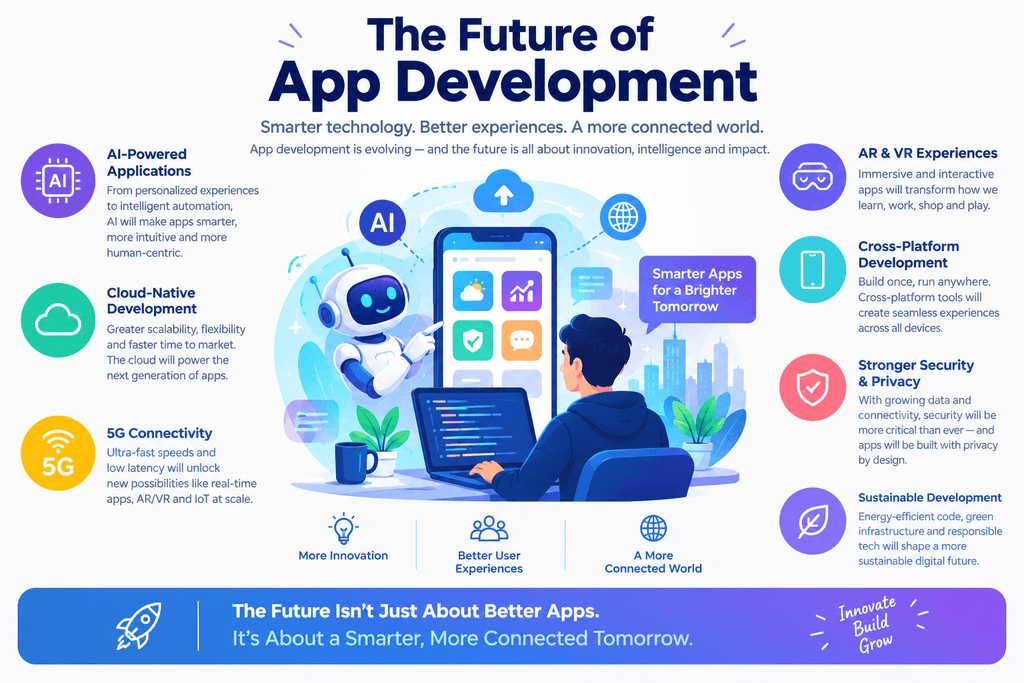
The app development industry continues to evolve as new technologies become available. Artificial intelligence, cloud computing, automation, augmented reality, Internet of Things technologies, and advanced analytics are influencing modern application development.
AI-powered features can support personalization, automation, recommendations, chatbots, predictive analytics, and intelligent decision-making.
Cloud-based development is also making applications more flexible and scalable. Meanwhile, low-code and no-code technologies are allowing businesses to create certain digital solutions with less traditional programming.
As customer expectations continue to increase, successful applications will need to be secure, fast, accessible, intuitive, and continuously improved.
Conclusion
App development companies play an important role in helping businesses transform ideas into powerful digital products. From mobile applications and web platforms to enterprise software and industry-specific solutions, professional development teams provide the technical expertise required to build, launch, and maintain modern applications.
The right development partner can help a business improve customer engagement, automate operations, increase efficiency, strengthen security, and create new opportunities for growth. When selecting an app development company, businesses should evaluate experience, portfolio quality, technical expertise, communication, security practices, pricing, and post-launch support.
Whether you are a startup developing your first MVP or an established organization planning a large-scale digital platform, investing in the right app development services can help turn your technology vision into a successful and scalable solution.
General & Selection Questions
Q1: How were the top mobile app development companies in the USA ranked for 2026?
The 2026 rankings evaluate agencies based on verified client reviews, portfolio diversity, technical expertise across iOS and Android platforms, market reputation, client retention rates, and their adoption of modern technologies like AI integration and cross-platform frameworks.
Q2: Why should I hire a US-based mobile app development company instead of an offshore team?
Hiring a US-based agency offers advantages in real-time communication, aligned working hours, cultural alignment with target US consumers, strict adherence to US data privacy laws (such as HIPAA or CCPA), and easier legal enforcement of contracts and intellectual property rights.
Costs & Timelines
Q3: How much does it cost to hire a top mobile app development company in the USA in 2026?
Hourly rates for premier US app development agencies generally range between $100 and $250+ per hour. Total project costs typically break down as follows:
- Simple / MVP Apps: $40,000 – $80,000
- Medium Complexity Apps: $80,000 – $200,000
- Complex / Enterprise Platforms: $200,000 – $500,000+
Q4: How long does it take a top US agency to develop a mobile application?
On average, mobile app development takes 4 to 9 months from discovery to release:
- Discovery & Design: 4 to 8 weeks
- Development & Sprints: 12 to 24 weeks
- Testing & App Store Approval: 3 to 6 weeks
Technical Capabilities & Process
Q5: Do top US app developers build for both iOS and Android?
Yes. Leading agencies specialize in both native development (Swift for iOS, Kotlin for Android) and cross-platform frameworks (Flutter, React Native). They can recommend the right tech stack based on your target audience, performance requirements, and budget.
Q6: What key services are included when working with a top-tier app development partner?
Full-service US mobile app agencies handle the complete lifecycle:
- Market research, product strategy, and technical architecture
- UI/UX wireframing, prototyping, and user testing
- Native/Cross-platform coding and API development
- Quality assurance, security auditing, and compliance checks
- App Store Optimization (ASO) and submission to Apple and Google stores
Post-Launch & Ownership
Q7: Who owns the app’s intellectual property and source code?
Upon final payment, full ownership of the source code, design assets, and intellectual property transfers completely to you. Top agencies include explicit IP assignment clauses in their standard Master Services Agreements (MSAs).
Q8: What post-launch maintenance options do US app companies provide?
Most ranked agencies offer ongoing Service Level Agreements (SLAs) for post-launch maintenance. These packages cover annual iOS and Android operating system updates, critical bug fixes, server infrastructure monitoring, security patches, and ongoing feature rollouts.